Buying a Campervan or Car in New Zealand: The Complete Step-by-Step Guide
In this article
- Key Concepts: New Zealand Vehicle Paperwork Explained
- 1. WOF (Warrant of Fitness): Your Car’s Roadworthiness Check
- 2. REGO (Registration): The Vehicle Licensing Fee
- 3. Transferring Ownership: The MR13B Form for Travelers
- 4. Auto Insurance: Essential for Peace of Mind
- Choosing Your Ride: Self-Contained Campervan vs. Standard Car
- Where to Buy: Finding Backpacker Vehicles in New Zealand
- Essential Checklist: 4 DIY Mechanical Checks
- 1. The Dipstick & Oil Cap Test
- 2. The Exhaust Smoke Test
- 3. The Chassis Rust Inspection
- 4. The Timing Belt (Cambelt)
- Professional Inspection: The AA Pre-Purchase Check
- Know Your Legal Rights: The 28-Day WOF Rule
- The 28-Day Rule
- Backpacker Strategy: Timing Your Purchase and Resale
- Running into Trouble? Your Lifeline: Citizens Advice Bureau (CAB)
- How CAB helps you take action:
- Final Thoughts
- Buying Your First Vehicle Abroad: Adrenaline, Excitement, and a Touch of Fear
Our dream when we arrived in New Zealand was to buy a van, embark on an epic adventure through the Southern Alps, wake up to breathtaking mountain views, and soak in quiet afternoon breezes. For almost anyone arriving on a Working Holiday visa or setting off on an extended road trip, buying your own wheels is practically a rite of passage—and often much cheaper than renting for months on end.
The catch? Most of us traveling on a backpacker visa aren’t professional mechanics, and nobody wants their dream trip derailed by a scam or a broken engine in the middle of nowhere.
At first, I’d just pop the hood and stare blankly, trying to make sense of what I was looking at. By the end of our trip, beyond fulfilling that dream road trip, we went through a chaotic ordeal with a camper that was burning oil like crazy. It turned into a massive headache, but New Zealand’s consumer protection laws saved us, and everything worked out in the end. That experience inspired me to write this guide: to save fellow backpackers and travelers from costly mistakes and share all the practical lessons we learned the hard way.
Here is everything you need to know about vehicle paperwork, legal procedures, traveler-specific regulations, mechanical checks, and smart buying strategies for your New Zealand road trip.
Key Concepts: New Zealand Vehicle Paperwork Explained
1. WOF (Warrant of Fitness): Your Car’s Roadworthiness Check
Vehicle Safety Certification
The WOF is New Zealand’s mandatory technical inspection certifying that a vehicle meets basic safety standards to drive on public roads (checking brakes, lights, tire tread, seatbelts, and structural chassis rust).
Inspection frequency depends on the vehicle’s age:
- Registered on or after January 1, 2000: The WOF is valid for 12 months.
- Older vehicles (1999 or earlier): Inspection standards are strict and mandatory every 6 months.
2. REGO (Registration): The Vehicle Licensing Fee
The Rego is the mandatory road tax/licensing fee. It comes as a paper label displayed on the lower-left corner of the windscreen (passenger side) showing its expiration date. Essentially, it is what you pay the government for the right to use public roads. It costs around $100 NZD per year, and you can renew it for 3, 6, or 12 months online or at any post shop.
Backpacker Warning: Before handing over any cash, check the label carefully to avoid inheriting someone else’s debt. If the previous owner let the Rego lapse three months ago and you buy the vehicle, that unpaid debt becomes yours. When you go to transfer the title, the system will charge you for all those overdue months on the spot.
The 12-month rule: If a vehicle’s Rego has been expired for more than a year, the NZ Transport Agency (NZTA) cancels the registration and revokes the license plates (the vehicle becomes “deregistered”). Getting a deregistered car back on the road is expensive and a bureaucratic nightmare. If the Rego has lapsed for many months, walk away.
3. Transferring Ownership: The MR13B Form for Travelers
To complete the change of ownership in person, visit any PostShop, authorized Automobile Association (AA) center, or VTNZ branch.
- What to bring: Your passport, your home country driver’s license (with an official English translation or International Driving Permit), and NZD $15.
- The Form: Grab the MR13B Form (Notice to buyer of registered motor vehicle). It takes two minutes to fill out with your details, the seller’s information, and the vehicle specs. Hand it to the clerk, pay the fee, and you are officially the owner.
- What address should you use as a traveler? Since you likely don’t have a permanent lease yet, you can provide the physical address of your current hostel, campsite, or a local friend’s house (always give reception a quick heads-up). Once you settle into a flat or change locations later, you can update your address for free on the NZTA website in two minutes.
- Seller’s obligation: Remind the seller to submit their matching MR13A Form on the same day (they can do it online) so NZTA’s database syncs immediately.
4. Auto Insurance: Essential for Peace of Mind
Unlike in many countries, car insurance is not legally mandatory in New Zealand, but traveling without it is reckless. While there are several tiers of coverage, the absolute baseline for any backpacker budget is Third-Party Property Insurance.
This will not cover damage to your own van, but it prevents you from being held personally liable for thousands of dollars if you accidentally bump into an expensive vehicle. Providers like AA or AMI allow you to sign up online in five minutes with flexible, budget-friendly monthly payments.
Choosing Your Ride: Self-Contained Campervan vs. Standard Car
Before you start shopping, decide which vehicle type matches your travel style and budget:
- Self-Contained Campervans (CSC): To freedom camp for free on designated council land across New Zealand, your vehicle must hold a certified Self-Contained warrant (the green sticker). New regulations require a permanently fixed toilet. Self-contained vans hold their value extremely well and save you thousands in campsite fees, though they come with a higher upfront price tag.
- Non-Self-Contained Vans & Station Wagons: Vehicles with a mattress in the back (without fixed plumbing) are cheaper to buy, but you are legally restricted to staying at paid holiday parks or Department of Conservation (DOC) campsites with toilet facilities.
- Standard Cars / Hatchbacks: The most fuel-efficient and mechanically reliable option on a tight budget. Pair a reliable hatchback with a good tent and camping gear if you prefer driving agility over living inside a vehicle.
Where to Buy: Finding Backpacker Vehicles in New Zealand
- Backpacker Facebook Groups: Communities like “Backpacker Campervans New Zealand”, “Buy/Sell Cars Auckland & Christchurch”, and local Working Holiday groups are packed with travelers selling fully equipped rigs (pots, pans, stoves, and bed setups included).
- Trade Me (trademe.co.nz): New Zealand’s primary classifieds platform. You’ll find more local private sellers and dealers here, often offering cleaner, less abused vehicles than backpacker-to-backpacker sales.
- Auckland & Christchurch Car Fairs / Hostel Noticeboards: Great spots to inspect multiple traveler vehicles in a single afternoon and speak directly with outgoing owners.
- Registered Motor Vehicle Traders (Dealers): Dealers must legally display a Consumer Information Notice (CIN) on the window, certifying that the odometer is genuine and the vehicle has no security liens. Purchases from dealers are protected by the Consumer Guarantees Act (CGA), giving you strong statutory rights if the vehicle has undisclosed defects.
- Private Sellers: Private sales do not fall under the Consumer Guarantees Act. You are solely responsible for due diligence. Always run the license plate on CarJam (carjam.co.nz) before meeting the seller. The free summary shows basic history, and the paid report reveals whether there is money owing (finance), outstanding road user charges, or past safety flags.
Essential Checklist: 4 DIY Mechanical Checks
1. The Dipstick & Oil Cap Test
Pop the hood and locate the engine oil dipstick (usually marked with a brightly colored ring). Pull it out, wipe it clean on a rag, push it all the way back in, and pull it out again:
- Level: The oil should sit between the minimum and maximum indicator marks. Low oil suggests the owner neglected routine maintenance.
- Color: Fresh oil is amber or translucent golden-brown. If it is pitch black and sludgy, it is long overdue for a change.
The dreaded “mayonnaise”: Unscrew the engine oil filler cap and check underneath. If you spot a milky, light brown or beige frothy residue resembling mayonnaise, coolant is leaking into the engine oil—a classic sign of a blown head gasket. Fixing a blown head gasket will often cost more than the van is worth.
2. The Exhaust Smoke Test
Start the engine and give the accelerator a gentle press while idling. Watch what comes out of the exhaust tailpipe:
- Thick white smoke: A faint vapor that disappears quickly on chilly mornings is harmless condensation. However, thick, persistent white smoke with a sweet smell means the engine is burning coolant (another blown head gasket red flag).
- Blue or greyish smoke: The engine is burning oil, typically caused by worn piston rings or valve stem seals. This is a severe, expensive issue—walk away unless you want to spend your road trip budget on an engine rebuild.
- Black smoke: Indicates the engine is burning excess fuel, often due to a dirty air filter or failing injectors. On older diesel campers, a tiny puff under hard acceleration is normal, but continuous black smoke will cause the vehicle to fail its next WOF inspection.
3. The Chassis Rust Inspection
Surrounded by ocean air, New Zealand vehicles are particularly vulnerable to rust. Crouch down and examine the undercarriage, chassis rails, sills, and wheel arches. Minor surface rust on untreated parts is normal, but if the structural metal is bubbling, flaking, or crumbling when pressed, the car will fail its WOF. Structural rust repairs in NZ must be carried out by certified welders, which can cost thousands.
4. The Timing Belt (Cambelt)
When was the cambelt last replaced? The timing belt synchronizes the engine’s internal components. If it snaps while driving, the valves and pistons will collide, destroying the engine in seconds. Cambelts generally need replacement every 100,000 km. Look for a service sticker inside the engine bay noting the date and mileage of the last replacement. If the odometer shows 220,000 km and the sticker reads 100,000 km, budget an extra $500–$800 NZD for an immediate replacement.
Professional Inspection: The AA Pre-Purchase Check
The New Zealand Automobile Association (AA) offers comprehensive pre-purchase vehicle inspections across almost every major town and city. While they don’t take sides in financial negotiations, their comprehensive technical reports highlight hidden mechanical defects you might miss.
You can book an inspection before finalizing the purchase or include a 48-hour inspection contingency clause with the seller.
- How it works: You arrange with the seller for an AA mobile inspector to evaluate the vehicle (usually costing between $130 and $210 NZD depending on vehicle size and membership).
Know Your Legal Rights: The 28-Day WOF Rule
New Zealand consumer law provides robust protections for buyers, provided you understand the basic rules:
The 28-Day Rule
By law, any vehicle sold in New Zealand must have a Warrant of Fitness issued within 28 days prior to the sale date (unless the buyer explicitly agrees in writing to purchase it “as is, where is”). The current WOF expiry is printed on a square sticker located on the top-right corner of the windscreen from the driver’s seat.
The WOF proves that the vehicle met minimum safety criteria at the time of testing.
Crucial note: A WOF is not a mechanical guarantee. It does not check engine wear, gearbox health, or slow oil leaks. A vehicle can pass a WOF in the morning and suffer engine failure the next week. That is why pairing a fresh WOF with an independent mechanical check is essential for peace of mind.
Backpacker Strategy: Timing Your Purchase and Resale
Vehicle prices in New Zealand fluctuate heavily based on the travel seasons:
- When to buy: Autumn and winter (April to August) are buyer’s markets. Departing backpackers are eager to sell before leaving, resulting in lower prices and room for negotiation.
- When to sell: Spring and early summer (October to January) see massive waves of arriving Working Holiday travelers, pushing campervan demand and resale prices to their peak.
- Location dynamics: Auckland (North Island) usually has the largest inventory. Christchurch (South Island) often has eager buyers ready to start their South Island loop immediately, making it a great place to list your vehicle at the end of your trip.
Running into Trouble? Your Lifeline: Citizens Advice Bureau (CAB)
Even when you take every precaution, things can go sideways. If you discover you were sold a vehicle with a severe undisclosed defect or that the seller deliberately misled you, do not simply accept the loss.
While resolving a dispute takes patience, the Citizens Advice Bureau (CAB) is an absolute lifesaver. In our case, their assistance made all the difference: they sat down with us, reviewed our case, helped organize our documentation, and supported us through our formal complaint. We will always be deeply grateful to the advisor at the Queenstown office who guided us through the process.
CAB is a completely free, confidential, and independent nationwide community organization. They have offices across New Zealand and offer warm, practical assistance (including translation help if navigating legal terms in English feels intimidating).
How CAB helps you take action:
- If you bought from a dealer: CAB will help you draft a formal notice under the Consumer Guarantees Act (CGA). If the dealer refuses to provide an adequate remedy (repair, replacement, or refund), you can escalate the matter to the Motor Vehicle Disputes Tribunal (MVDT) for a small fee (around $87 NZD). The MVDT has the legal authority to enforce binding orders against dealers.
- If you bought from a private seller: While private sales have fewer statutory protections, you can still file a claim through the Disputes Tribunal if you have evidence of fraudulent misrepresentation. New Zealand’s tribunal system is designed to be accessible, fair, and navigable without hiring expensive lawyers.
Final Thoughts
Buying Your First Vehicle Abroad: Adrenaline, Excitement, and a Touch of Fear
Buying a vehicle abroad is an exhilarating mix of adrenaline, excitement, and a healthy dose of nervousness. That campervan or car will be your mobile home, your basecamp for backcountry hikes, and your ticket to exploring one of the most stunning countries on earth.
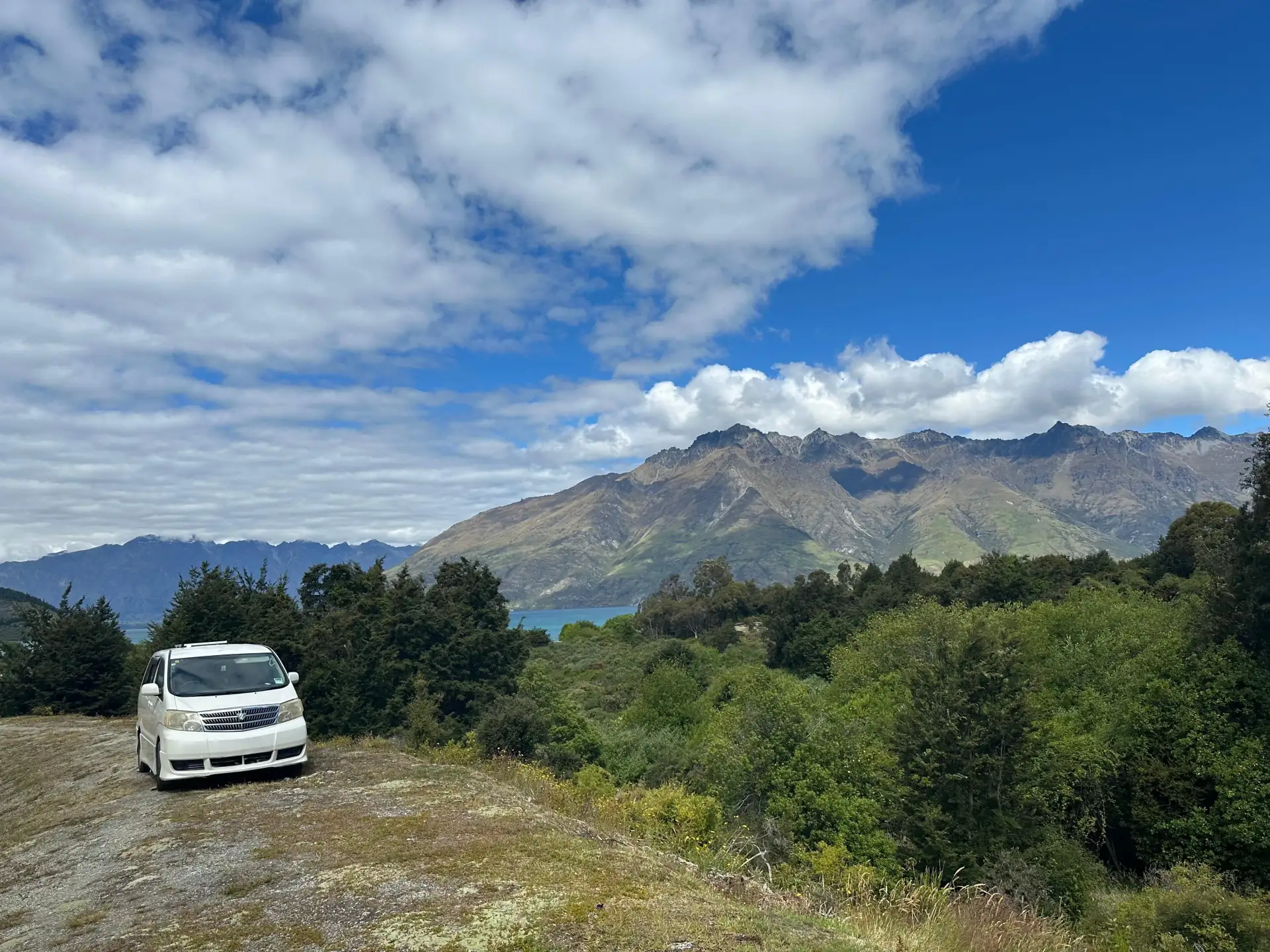
 Vista desde la camper en Bowentown Look Out
It is your campsite on wheels, your refuge on stormy nights, and your front-row seat to sunrise over coastal cliffs and mountain ranges. Because it is such a central part of your travel experience, take your time: inspect thoroughly, check the paperwork, and trust your gut. Never let a seller rush you, don’t fall for the first shiny van you see, and make sure the vehicle matches your route. When we share practical knowledge and watch out for each other on the road, our road trips stay an unforgettable adventure rather than a costly headache.
Safe travels out on the open road!
Support our project & travel smarter

Book your stays
Book through our link to support the blog at no extra cost to you.
Search accommodation
Internet on your trip
Stay connected anywhere with an Airalo eSIM. Easy to install and no roaming charges.
Get Airalo eSIM